
How to Create a Low-Cost Portfolio Website for Freelance Photographers

As a freelance photographer, showcasing your work online through a professional portfolio website is essential for attracting clients and building your brand. However, high web design and hosting costs can be a barrier, especially when you’re starting out. The good news is that creating a stunning, functional portfolio site doesn’t have to break the bank. With the right tools and strategies, you can build a low-cost portfolio website that highlights your photography and serves as a powerful marketing tool. Here’s a step-by-step guide on how to create a budget-friendly portfolio website tailored for freelance photographers:

1. Choose an Affordable Platform or Website Builder

There are several cost-effective website builders designed for creatives and photographers that don’t require coding skills:

  • Wix and Squarespace offer easy drag-and-drop interfaces with photography-specific templates starting around $12-$16/month.
  • WordPress.com provides free or low-cost plans with access to photography themes; pairing this with inexpensive hosting providers like
READ MORE
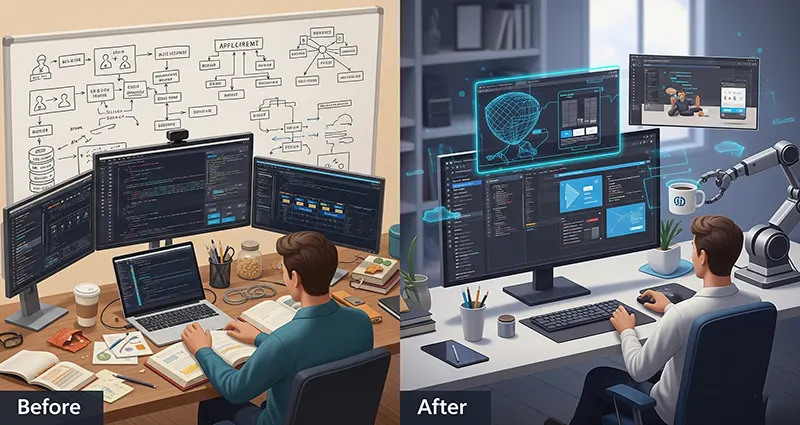
Impact of Generative AI on Full-Stack Web Development Workflows

The rise of generative AI technologies is revolutionizing multiple industries, and full-stack web development is no exception. Generative AI offers powerful tools that enhance creativity, accelerate coding, and improve efficiency throughout the development lifecycle. As full-stack developers handle both frontend and backend tasks, incorporating generative AI into workflows is reshaping how websites and web applications are built, tested, and maintained. Here’s an in-depth look at the impact of generative AI on full-stack web development workflows:

1. Accelerated Code Generation and Prototyping

Generative AI models, such as OpenAI’s Codex or GitHub Copilot, can generate code snippets or entire functions based on natural language prompts. This dramatically speeds up the prototyping phase by allowing developers to quickly turn ideas into working code. Instead of manually writing boilerplate code or complex algorithms, developers can leverage AI-generated code to focus on higher-level problem-solving and design.

2. Reduced Repetitive Work

Full-stack development often involves repetitive … READ MORE