
Organic Anti-Grid Layouts for Creative Brand Websites

The modern web has become structurally monotonous. Walk through the digital storefronts of luxury fashion houses, independent design studios, and enterprise SaaS platforms, and you will encounter the same predictable architecture: rigid geometric boxes, symmetrical card modules, and uniform container widths. The massive dominance of standard responsive frameworks has commoditized layout design, reducing the vibrant canvas of the browser into a series of predictable templates. While this homogenization offers predictable patterns for information retrieval, it strips creative brands of their unique personality.

To stand out in a crowded digital landscape, forward-thinking brands are shifting toward organic, anti-grid layouts. By embracing asymmetrical structures, layered fluid depths, overlapping typography, and curvilinear motion paths, designers can break free from traditional container boundaries. When executed correctly, anti-grid web design allows creative brands to cultivate a distinct visual identity and evoke deep emotional resonance, transforming a standard digital store or portfolio into an immersive, … READ MORE


Managed Autoscaling Cloud Hosting for High Traffic Stores

In the high-stakes world of enterprise e-commerce, digital infrastructure performance directly dictates business survival. During peak traffic events—such as Black Friday, Cyber Monday, global flash sales, or viral marketing spikes—even a single minute of unexpected downtime or high page-latency translates directly to tens of thousands of dollars in abandoned shopping carts, wasted ad spend, and long-term brand damage.

Traditional fixed-resource web hosting environments, such as standard Virtual Private Servers (VPS) or isolated dedicated bare-metal servers, force businesses into a dangerous operational compromise: companies must either over-pay for massive computing power that sits completely idle $95\%$ of the year, or under-provision their setups and risk catastrophic site crashes when user traffic floods the checkout pipeline.

Implementing an automated, horizontally scaling managed cloud architecture is the only definitive method to ensure high-traffic e-commerce stores maintain optimal page speeds, zero-downtime availability, and true cost efficiency under highly volatile transaction loads.

The Mechanics of

READ MORE
Post-Deployment Optimization for Core Web Vitals in WDLC

In the modern web ecosystem, pushing code to production is not the finish line of the development process. While a web application may pass local audits and staging benchmarks with perfect scores, real-world performance metrics frequently degrade post-launch. Once an application is live, it encounters a chaotic array of real-world variables: unpredictable mobile network latencies, varying device hardware capabilities, and dynamic third-party marketing payloads.

Because Google’s Core Web Vitals directly influence organic search engine rankings and conversion rates, performance maintenance must be treated as an ongoing operation. Integrating a continuous, post-deployment optimization loop into the Web Development Life Cycle (WDLC) is essential to transition web performance from a reactive firefighting chore into an automated, data-driven engineering science.

Real User Monitoring (RUM) vs. Synthetic Testing

To manage post-deployment regressions effectively, engineering teams must understand the distinct roles of the two primary performance data collection methodologies:

  • Synthetic Lab Data: Tools like Google
READ MORE
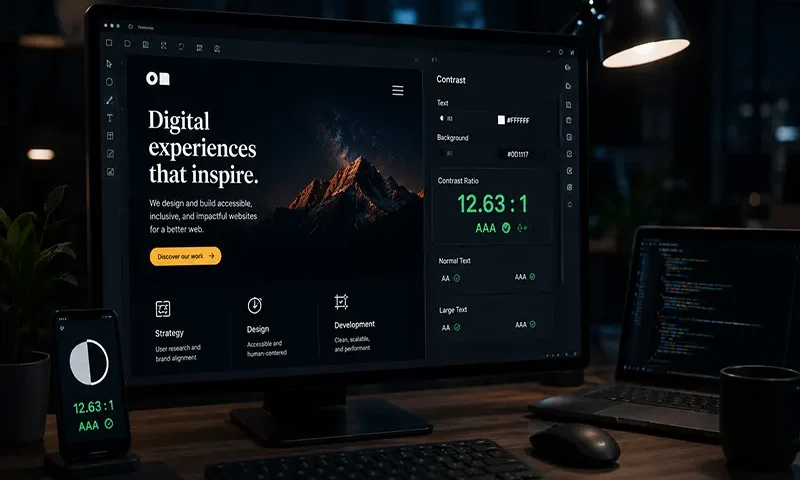
Contrast Ratio Checker for Web Accessibility Compliance

Digital accessibility is not an optional feature or a post-production polishing step; it is a fundamental human right. When a digital interface lacks sufficient visual distinction, millions of users with low vision, color blindness, cataracts, or situational impairments (such as screen glare in direct sunlight) are completely locked out of the experience.

As global regulatory landscapes tighten, digital accessibility engineering has transformed into a strict legal requirement. Frameworks like the Americans with Disabilities Act (ADA) in the United States, the European Accessibility Act (EAA) across the EU, and Section 508 for government procurement anchor their visual requirements directly to codified metrics. Integrating an automated contrast ratio checker into the design-to-development pipeline is the only definitive way to eliminate visual barriers, ensure legal compliance, and craft user interfaces that are legible to everyone.

The Mathematical Physics of Color: Luminance and Contrast

Many designers and frontend developers mistakenly assume that color contrast … READ MORE