
Sustainable Web Development Life Cycle and Digital Carbon Footprint

The global tech ecosystem is often perceived as a clean, weightless cloud. However, the internet is not invisible; it is anchored to a massive, energy-intensive physical infrastructure. Millions of servers spinning inside hyper-scale data centers, vast fiber-optic routing networks buried beneath oceans, and billions of client smartphones and laptops all demand continuous electrical power.

The global digital footprint emits a volume of greenhouse gases equivalent to or exceeding that of the commercial aviation industry. As digital transformation accelerates, web developers and technology executives must confront the environmental realities of their creations.

By transforming the traditional Web Development Life Cycle (WDLC) into a sustainable framework, engineering teams can systematically measure, isolate, and radically reduce the digital carbon footprint of their applications without compromising user experience.

Quantifying the Digital Carbon Footprint: The Mechanics of Data Emissions

To optimize web applications for sustainability, developers must understand how digital assets consume energy. Digital carbon … READ MORE

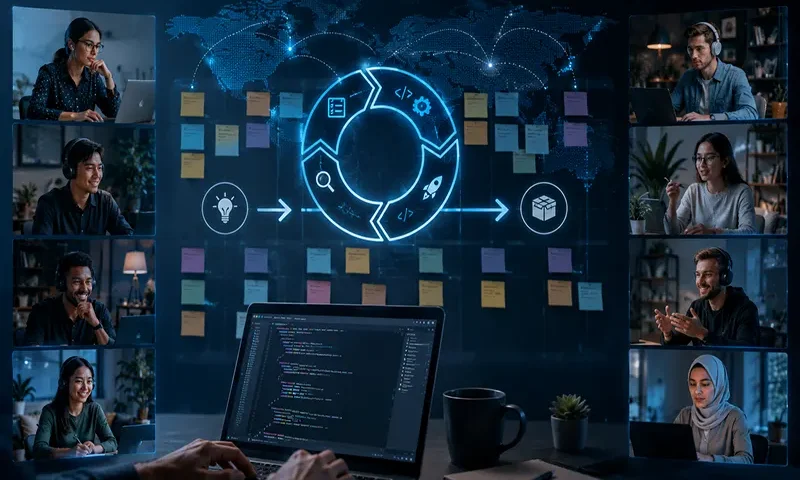
Agile Web Development Life Cycle for Remote Distributed Teams

Distributed engineering is no longer a temporary operational compromise or a localized hiring perk; it is a permanent competitive advantage. Building a fully remote or globally distributed engineering organization allows companies to source top-tier technical talent from anywhere on earth, lowering geographic overhead while fostering diverse problem-solving perspectives.

However, a core friction point persists inside this model: the Agile methodology was originally conceived on the assumption of physical co-location. The original Agile Manifesto favored physical whiteboards, daily standups conducted in a literal circle, and instant desk-side debugging sessions. Forcing a distributed engineering team spread across multiple continents into a synchronous, meeting-heavy Scrum structure leads to calendar exhaustion, communication silos, and a massive drop in software velocity.

Successfully executing the Agile Web Development Life Cycle (WDLC) across distributed time zones requires transitioning from synchronous dependency loops to intentional asynchronous processes, backed by deterministic tooling and radical documentation.

Re-Engineering Agile Rituals for

READ MORE
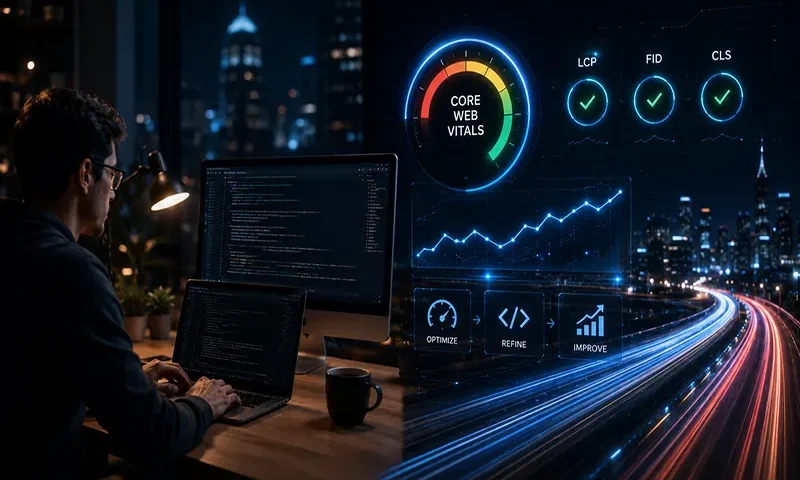
Post-Deployment Optimization for Core Web Vitals in WDLC

In the modern web ecosystem, pushing code to production is not the finish line of the development process. While a web application may pass local audits and staging benchmarks with perfect scores, real-world performance metrics frequently degrade post-launch. Once an application is live, it encounters a chaotic array of real-world variables: unpredictable mobile network latencies, varying device hardware capabilities, and dynamic third-party marketing payloads.

Because Google’s Core Web Vitals directly influence organic search engine rankings and conversion rates, performance maintenance must be treated as an ongoing operation. Integrating a continuous, post-deployment optimization loop into the Web Development Life Cycle (WDLC) is essential to transition web performance from a reactive firefighting chore into an automated, data-driven engineering science.

Real User Monitoring (RUM) vs. Synthetic Testing

To manage post-deployment regressions effectively, engineering teams must understand the distinct roles of the two primary performance data collection methodologies:

  • Synthetic Lab Data: Tools like Google
READ MORE
Impact of Agentic AI on Web Development Life Cycle Stages

The software engineering landscape is undergoing a profound structural evolution. For the past several years, artificial intelligence in web development was defined by passive, autocomplete assistance—generative “copilots” that required constant human prompting, line-by-line acceptance, and manual orchestration. In 2026, we are transitioning into the era of Agentic AI.

Agentic systems are not passive code editors. They are autonomous, multi-agent frameworks capable of independent planning, executing terminal commands, browsing the web, utilizing external APIs, and self-correcting their own runtime errors. This shift from simple code generation to autonomous orchestration is fundamentally reshaping the traditional Software Development Life Cycle (SDLC). The web engineering pipeline is transforming from a linear, human-bottlenecked assembly line into an automated, multi-agent orchestrated flywheel. As a result, the role of the human developer is shifting from a writer of syntax to a system director and architectural auditor.

Deconstructing the SDLC: Stage-by-Stage Agentic Impact

Every phase of building … READ MORE

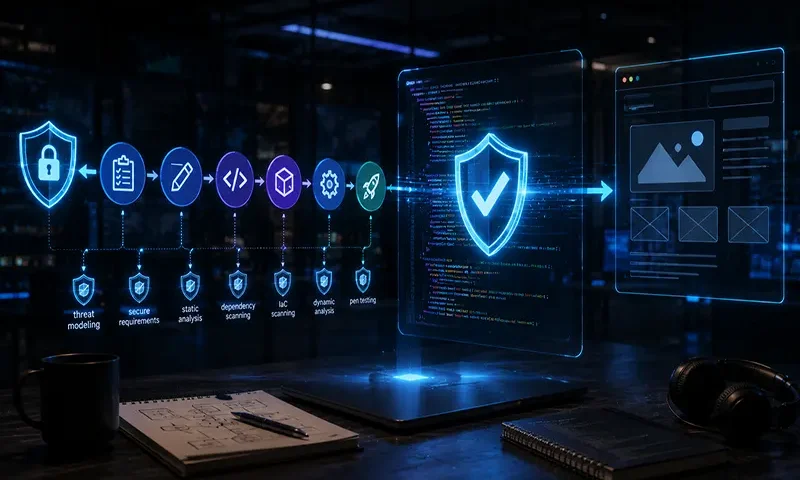
Integrating Shift-Left Security into the Web Development Life Cycle

For years, the traditional web development lifecycle followed a predictable but flawed path: design, build, test, and—right before pushing to production—hand the codebase over to the security team for a final audit. In this legacy model, security was treated as a final checkbox. The results were consistently disastrous. Vulnerabilities discovered at this late stage frequently triggered frantic, late-night code rewrites, pushed back hard launch deadlines, or worse, were missed entirely, leading to catastrophic production breaches.

As web architectures grow increasingly complex in 2026, relying on a final gatekeeper is no longer viable. Enter Shift-Left Security. This paradigm shift re-engineers the software development life cycle (SDLC) by moving security auditing, automated testing, and compliance guardrails to the earliest possible phases of development. Integrating security directly into the daily web development workflow is no longer an operational luxury; it is an essential engineering practice required to build resilient software without sacrificing … READ MORE