
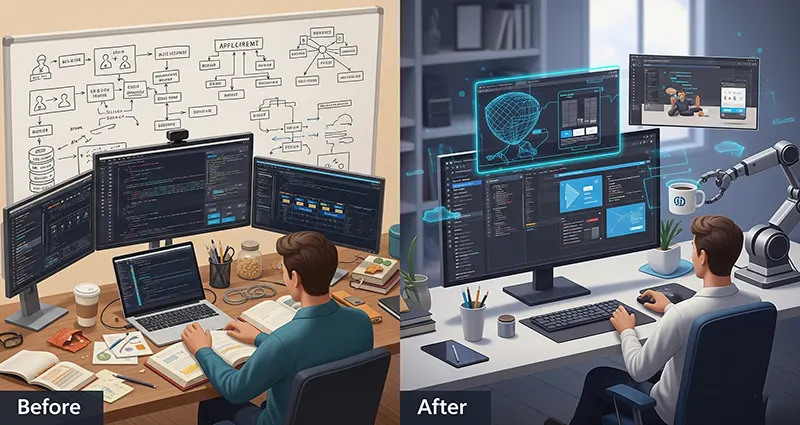
The rise of generative AI technologies is revolutionizing multiple industries, and full-stack web development is no exception. Generative AI offers powerful tools that enhance creativity, accelerate coding, and improve efficiency throughout the development lifecycle. As full-stack developers handle both frontend and backend tasks, incorporating generative AI into workflows is reshaping how websites and web applications are built, tested, and maintained. Here’s an in-depth look at the impact of generative AI on full-stack web development workflows:
1. Accelerated Code Generation and Prototyping
Generative AI models, such as OpenAI’s Codex or GitHub Copilot, can generate code snippets or entire functions based on natural language prompts. This dramatically speeds up the prototyping phase by allowing developers to quickly turn ideas into working code. Instead of manually writing boilerplate code or complex algorithms, developers can leverage AI-generated code to focus on higher-level problem-solving and design.
2. Reduced Repetitive Work
Full-stack development often involves repetitive tasks like setting up APIs, database schemas, or frontend components. Generative AI automates much of this routine work by generating standard code patterns tailored to specific requirements. This reduces human error, saves time, and allows developers to dedicate more effort to unique and challenging problems.
3. Enhanced Collaboration Between Frontend and Backend
Generative AI tools can help bridge the gap between frontend and backend development by producing synchronized codebases that ensure compatibility. For example, AI can generate consistent API contracts alongside frontend integration code, minimizing mismatches and simplifying debugging. This leads to smoother collaboration within development teams, especially when responsibilities overlap.
4. Improved Code Quality and Best Practices
AI-powered code suggestions often come with built-in knowledge of best practices, security standards, and optimization techniques. As a result, generative AI helps developers write cleaner, more efficient, and secure code. This support is particularly valuable in full-stack development, where managing security between frontend inputs and backend databases is critical.
5. Automated Testing and Debugging Assistance
Generative AI is influencing testing workflows by assisting in the creation of test cases, unit tests, and even automated bug fixes. AI tools can analyze existing codebases, detect potential issues, and suggest corrections or improvements. These capabilities streamline quality assurance processes and reduce time-to-release.
6. Learning and Upskilling Opportunities for Developers
With AI suggesting solutions and explaining code logic, full-stack developers can learn new frameworks, languages, or techniques on the fly. This makes it easier to adapt to evolving web development trends and incorporate emerging technologies without extensive formal training.
7. Ethical and Security Considerations
While generative AI offers numerous benefits, it also raises concerns about code reliability, intellectual property, and security vulnerabilities. Developers must carefully review AI-generated code to ensure it adheres to ethical standards, licensing requirements, and security protocols before deployment.
In summary, generative AI is transforming full-stack web development workflows by automating routine tasks, boosting productivity, and enhancing code quality. By integrating AI-powered tools into their workflow, developers can focus on innovation and complex problem-solving, ultimately delivering more sophisticated and reliable web applications. As AI technology continues to evolve, its impact on full-stack development promises to grow, making it an indispensable asset for developers aiming to stay ahead in a competitive landscape.

