
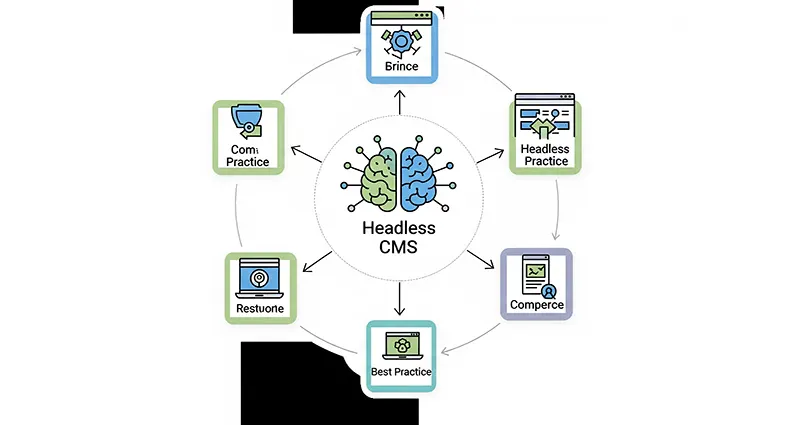
The e-commerce landscape is rapidly evolving, driven by consumer demand for seamless, personalized, and fast online shopping experiences. To meet these needs, many businesses are adopting headless CMS architecture, which decouples the content management backend from the frontend presentation layer. This approach offers flexibility, scalability, and enhanced performance, making it an ideal choice for modern e-commerce platforms. However, implementing a headless CMS requires careful planning to maximize its benefits. Here are the best practices for implementing headless CMS architecture in e-commerce:
1. Define Clear Objectives and Use Cases
Before implementation, clearly outline what you aim to achieve with a headless CMS—whether it’s omnichannel content delivery, faster page loads, easier integrations, or personalized customer experiences. Understanding your specific use cases will guide technology selection, architecture design, and workflow processes.
2. Choose the Right Headless CMS Platform
Not all headless CMS platforms are created equal. Select a solution that aligns with your e-commerce needs by considering:
- API capabilities: Robust RESTful or GraphQL APIs for seamless frontend integration.
- Scalability: Ability to handle your product catalog size and traffic volumes.
- Integration options: Compatibility with e-commerce platforms (like Shopify, Magento, or custom-built systems), payment gateways, and third-party services.
- Security features: Authentication, authorization, and compliance support.
Popular headless CMS options include Contentful, Strapi, and Sanity, each offering various strengths tailored to different e-commerce scenarios.
3. Design for Omnichannel Content Delivery
E-commerce businesses need to deliver consistent content across multiple touchpoints, including websites, mobile apps, social media, kiosks, and IoT devices. Headless CMS architecture excels at this by delivering content via APIs. Structure your content models to be modular and reusable to support diverse frontend experiences efficiently.
4. Optimize Frontend Performance
With headless CMS, the frontend framework handles rendering, so choose fast, modern frameworks like React, Vue.js, or Next.js. Implement server-side rendering (SSR) or static site generation (SSG) to improve load times and SEO performance, enhancing user experience and conversion rates.
5. Streamline Content Workflow and Collaboration
Implement workflows and roles within your headless CMS for content creation, review, and publishing. Utilize features like version control, localization support, and approval chains to maintain content quality, comply with regulations, and manage large teams effectively.
6. Ensure Robust Security and Compliance
E-commerce sites handle sensitive customer data and transactions. Secure your headless CMS by enforcing strong authentication, encrypting data in transit and at rest, and regularly updating software to patch vulnerabilities. Additionally, comply with regional regulations such as GDPR and CCPA by implementing privacy controls at the CMS level.
7. Integrate Seamlessly with E-Commerce Systems
Create smooth data flow between the headless CMS and your e-commerce backend. Synchronize product information, pricing, inventory, and promotional content to prevent inconsistencies. Use middleware or API orchestration tools if necessary to manage complex integrations.
8. Monitor, Analyze, and Iterate
Use analytics tools to track content performance, user behavior, and system health. Regularly evaluate these metrics to identify bottlenecks or content gaps. The decoupled nature of headless CMS allows you to iterate on frontend designs and backend content independently, enabling agile improvements.
Implementing a headless CMS architecture in e-commerce empowers businesses to deliver dynamic, personalized, and scalable shopping experiences across multiple channels. By following these best practices—from choosing the right platform to ensuring security and seamless integrations—e-commerce brands can fully leverage the flexibility and power of headless CMS to stay competitive and meet the growing expectations of today’s consumers.

