
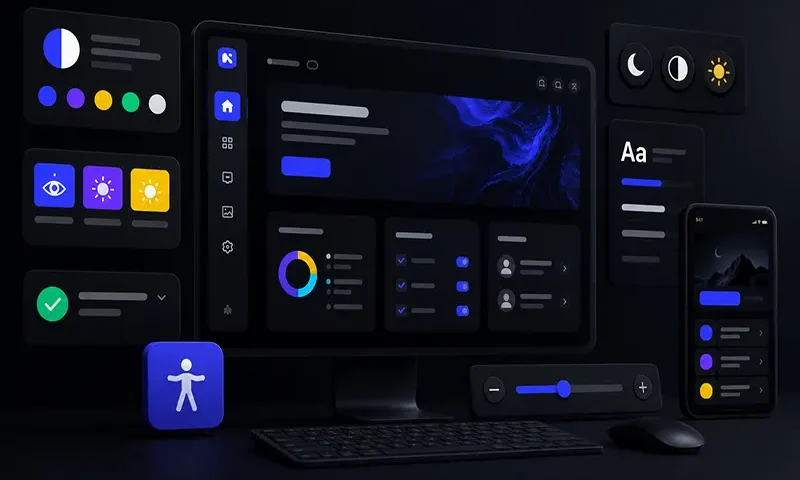
Inclusive Design Patterns for High Contrast Dark Mode
Dark mode is frequently treated as a trendy aesthetic preference, a sleek marketing asset, or a useful layout option to save mobile battery life. However, for millions of users worldwide, a dark interface is not an aesthetic luxury; it is a functional necessity. Individuals with specific visual or neurological conditions—such as severe photophobia (extreme light sensitivity), cataracts, ocular albinism, or traumatic brain injuries—experience physical pain, blurred vision, or immediate cognitive fatigue when navigating traditional bright interfaces.
Unfortunately, many standard dark themes fail foundational web accessibility compliance. Simply swapping a white canvas for a dark one often introduces muddy contrast levels, vibrating neon accents, or a complete loss of structural layout hierarchy when shadows disappear. Building an inclusive dark mode requires implementing adaptive, high-contrast design patterns that blend Web Content Accessibility Guidelines (WCAG) AAA compliance with modern CSS token architectures, ensuring interfaces remain highly readable and comfortable for all users.
The
… READ MORE