
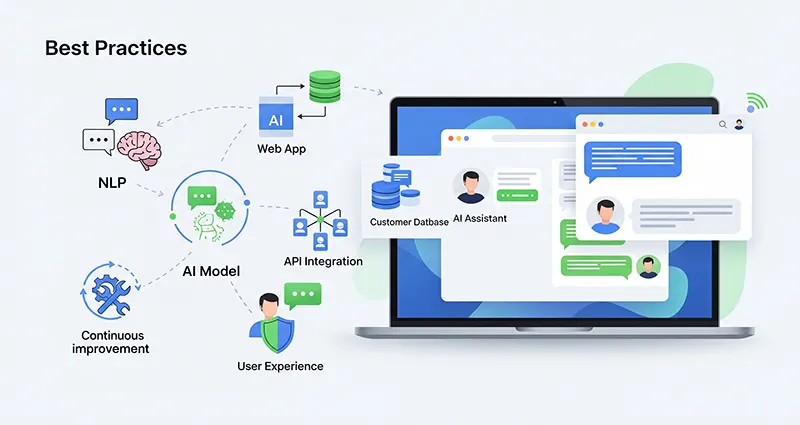
The integration of real-time AI chatbots into customer service web applications is revolutionizing how businesses interact with their customers. These intelligent chatbots provide instant responses, 24/7 availability, and personalized support, enhancing customer satisfaction while reducing operational costs. However, to fully leverage the potential of AI chatbots, it’s essential to follow best practices during integration. Here’s a comprehensive guide to the best practices for integrating real-time AI chatbots into customer service web applications.
1. Define Clear Objectives and Use Cases
Before integrating an AI chatbot, clearly outline what you want to achieve. Whether it’s handling FAQs, processing orders, troubleshooting, or escalating complex issues to human agents, defining specific use cases helps shape the chatbot’s design and functionality.
2. Choose the Right NLP Engine
Selecting a powerful Natural Language Processing (NLP) engine is critical for understanding and responding correctly to user queries. Popular NLP platforms like Google Dialogflow, Microsoft Azure Bot Service, or IBM Watson offer advanced language understanding capabilities that enhance chatbot accuracy and relevance.
3. Ensure Seamless Real-Time Interaction
Real-time responsiveness is the backbone of effective chatbot performance. Use WebSocket or similar technologies that support persistent bi-directional communication between the client and server to minimize latency and enable instant message delivery.
4. Implement Context Awareness and Personalization
To make interactions meaningful, AI chatbots should retain context during conversations and personalize responses based on user data and history. This improves user experience by reducing repetitive questions and delivering tailored assistance.
5. Design User-Friendly Interfaces
Integrate chatbots into your web application with intuitive, accessible interfaces. Features like quick reply buttons, suggested actions, typing indicators, and multi-language support can make conversations smoother and more engaging.
6. Integrate with Backend Systems
Connecting AI chatbots with CRM, order management, inventory systems, and knowledge bases ensures they can retrieve up-to-date information and perform tasks like tracking orders or updating customer details autonomously.
7. Provide an Easy Escalation Path to Human Agents
While AI chatbots are powerful, some situations require human intervention. Implement mechanisms for seamless escalation to human customer service representatives, ensuring a smooth handover without losing conversation context.
8. Monitor and Continuously Improve Chatbot Performance
Use analytics and feedback tools to monitor chatbot interactions, measure key performance indicators (KPIs) like resolution time and user satisfaction, and identify areas for improvement. Continuously training the AI model with new data helps maintain relevance and accuracy.
9. Prioritize Security and Privacy
Since chatbots handle sensitive customer information, ensure compliance with data protection regulations like GDPR. Encrypt communications, implement authentication where needed, and inform users about data usage policies to build trust.
10. Test Thoroughly Before Deployment
Conduct comprehensive testing including functional testing, load testing, and user acceptance testing to identify bugs, performance bottlenecks, and usability issues. Testing across multiple devices and browsers guarantees a consistent user experience.
Integrating real-time AI chatbots into customer service web applications can significantly enhance customer engagement and operational efficiency. By following these best practices—defining clear goals, selecting robust NLP technology, ensuring real-time responsiveness, personalizing user interactions, enabling human escalation, and maintaining security—businesses can deliver exceptional customer service experiences. Continuous monitoring and improvement will keep the chatbot relevant and effective, ultimately driving customer satisfaction and loyalty in today’s digital marketplace.

